Cost & Savings
The Cost & Savings page is Yuki's main dashboard for Snowflake spend. It combines what you spent, what Yuki saved you, and where the cost comes from into a single view.
Page Overview
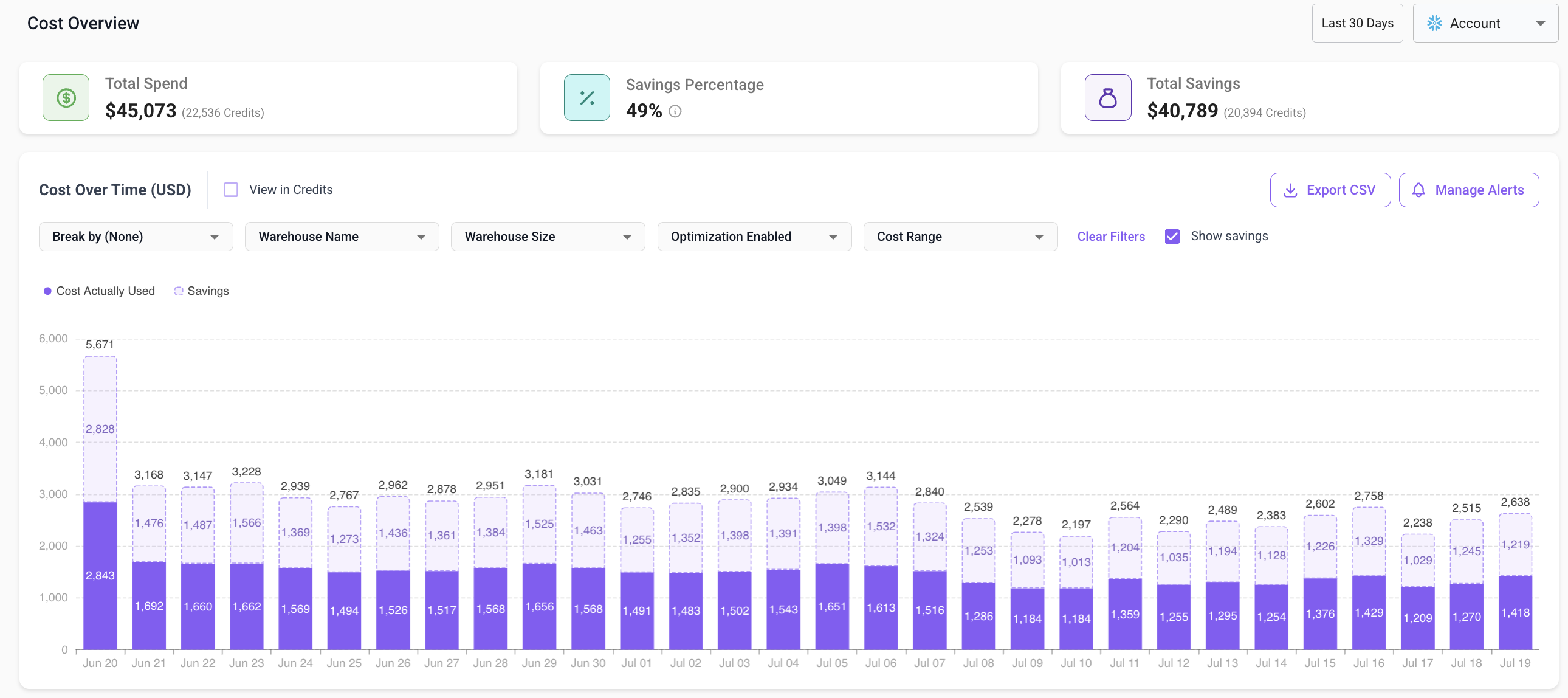
At the top, three summary cards:
| Metric | Description |
|---|---|
| Total Spend | Your total Snowflake cost (dollars and credits) for the selected time range |
| Savings Percentage | Percentage reduction in cost achieved through Yuki optimization |
| Total Savings | Total savings achieved (dollars and credits) for the selected time range |
Use the time range selector (top right) to adjust the view, and the account selector to switch between connected Snowflake accounts.
Cost Over Time Chart
The main chart shows daily cost, with Cost Actually Used (solid bars) and Savings (dashed, lighter bars) stacked together so you can see both what you spent and what Yuki saved you.
- Toggle View in Credits to switch the y-axis between dollars and credits
- Toggle Show savings to hide the savings portion and see actual spend only
- Filter by Warehouse Name, Warehouse Size, Optimization Enabled, or Cost Range
- Export CSV to download the underlying data
- Manage Alerts to set up cost and anomaly alerts (see Cost & Anomaly Alerts)
Break By
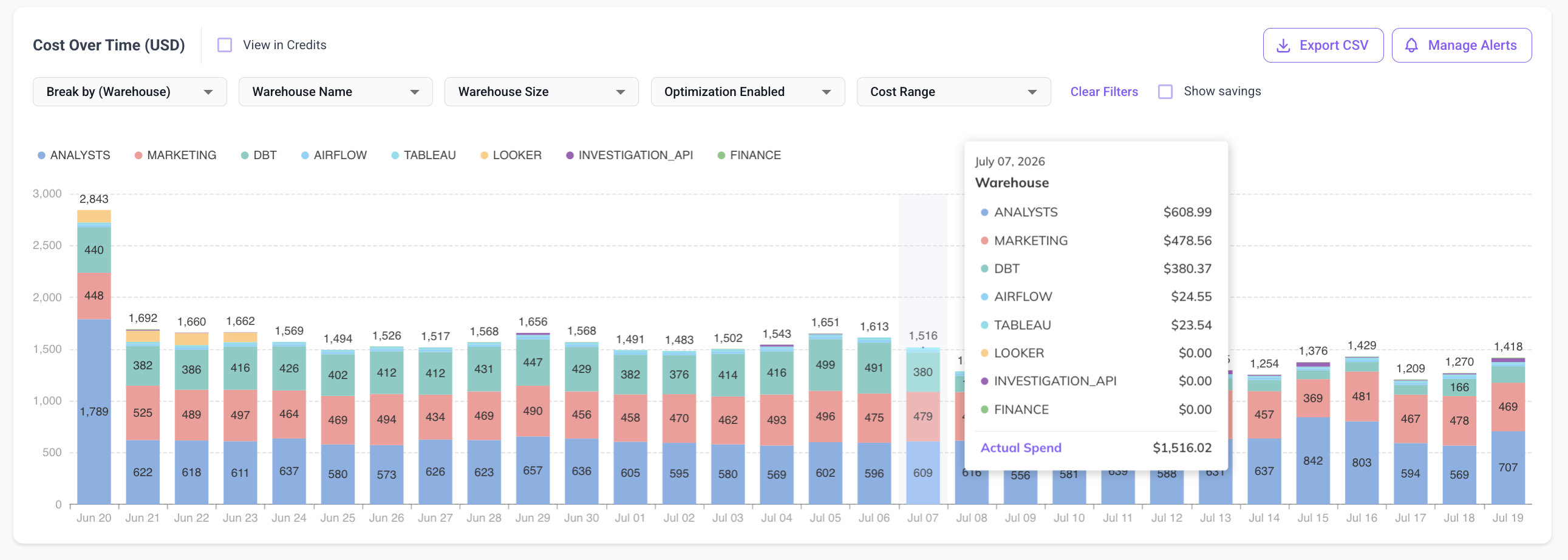
Use the Break by dropdown to split each bar and see where the cost comes from. Hovering over a bar always shows a tooltip with the breakdown for that day and the total Actual Spend.
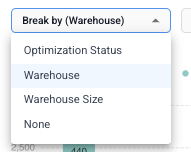
| Break by | What it shows |
|---|---|
| None | A single bar per day - total cost actually used, plus savings if Show savings is on |
| Warehouse | One segment per warehouse, so you can see which warehouses drive the most spend on a given day |
| Warehouse Size | One segment per warehouse size (e.g., X-Large, Medium, Large) - useful for spotting whether spend is concentrated in larger warehouses |
| Optimization Status | Splits spend by whether Yuki had a chance to optimize it: Routed Through Yuki is spend from queries that went through the Yuki Proxy, where Yuki could resize warehouses and generate savings. Not Routed Through Yuki is spend from queries that connected to Snowflake directly, bypassing the proxy - Yuki never saw these queries, so they weren't optimized. For the routed portion, the tooltip further breaks down Saved by Yuki, Actual routed spend, and a Savings % specific to that portion |
Warehouse Breakdown
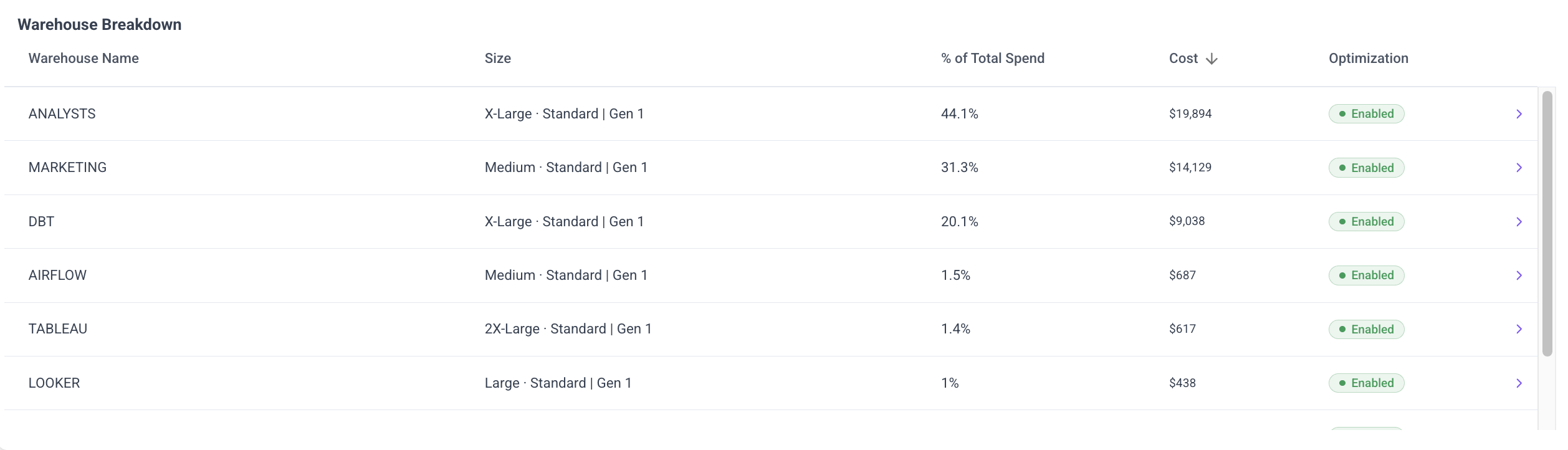
A table listing every warehouse with its size, share of total spend, cost, and whether Yuki optimization is enabled. Click a row to expand it and see the breakdown by user - useful for spotting which users or roles aren't sending their queries through Yuki, so you can find and close adoption gaps.
| Column | Description |
|---|---|
| Warehouse Name | The Snowflake warehouse associated with the spend |
| Size | Configured size (e.g., Medium, X-Large) |
| % of Total Spend | The warehouse's share of your total spend |
| Cost | Cost in dollars |
| Optimization | Whether Yuki optimization is active (Enabled) |
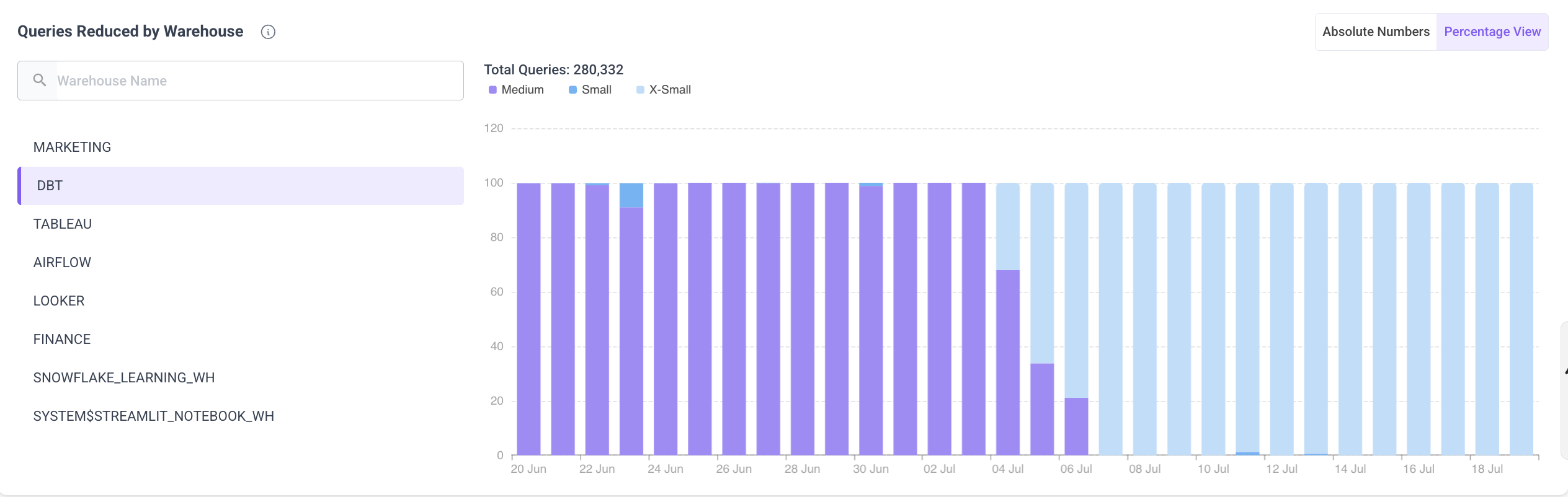
Queries Reduced by Warehouse
This section shows how Yuki dynamically resized queries for a selected warehouse:
- Search or select a warehouse from the list on the left
- Each bar shows the proportion of queries run at each warehouse size (e.g., Medium, Small, X-Small) on that day
- Toggle between Absolute Numbers and Percentage View
Cost & Anomaly Alerts
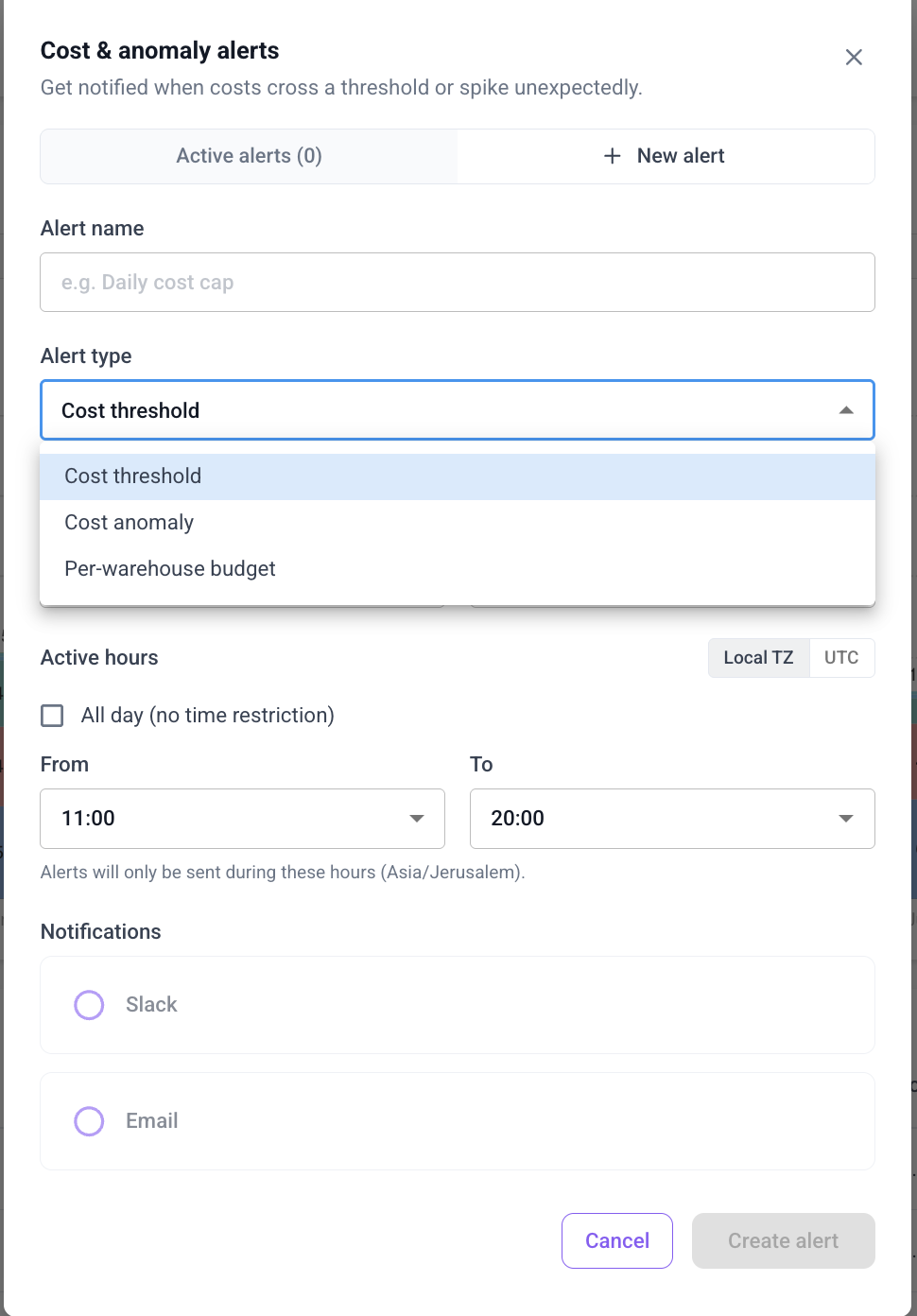
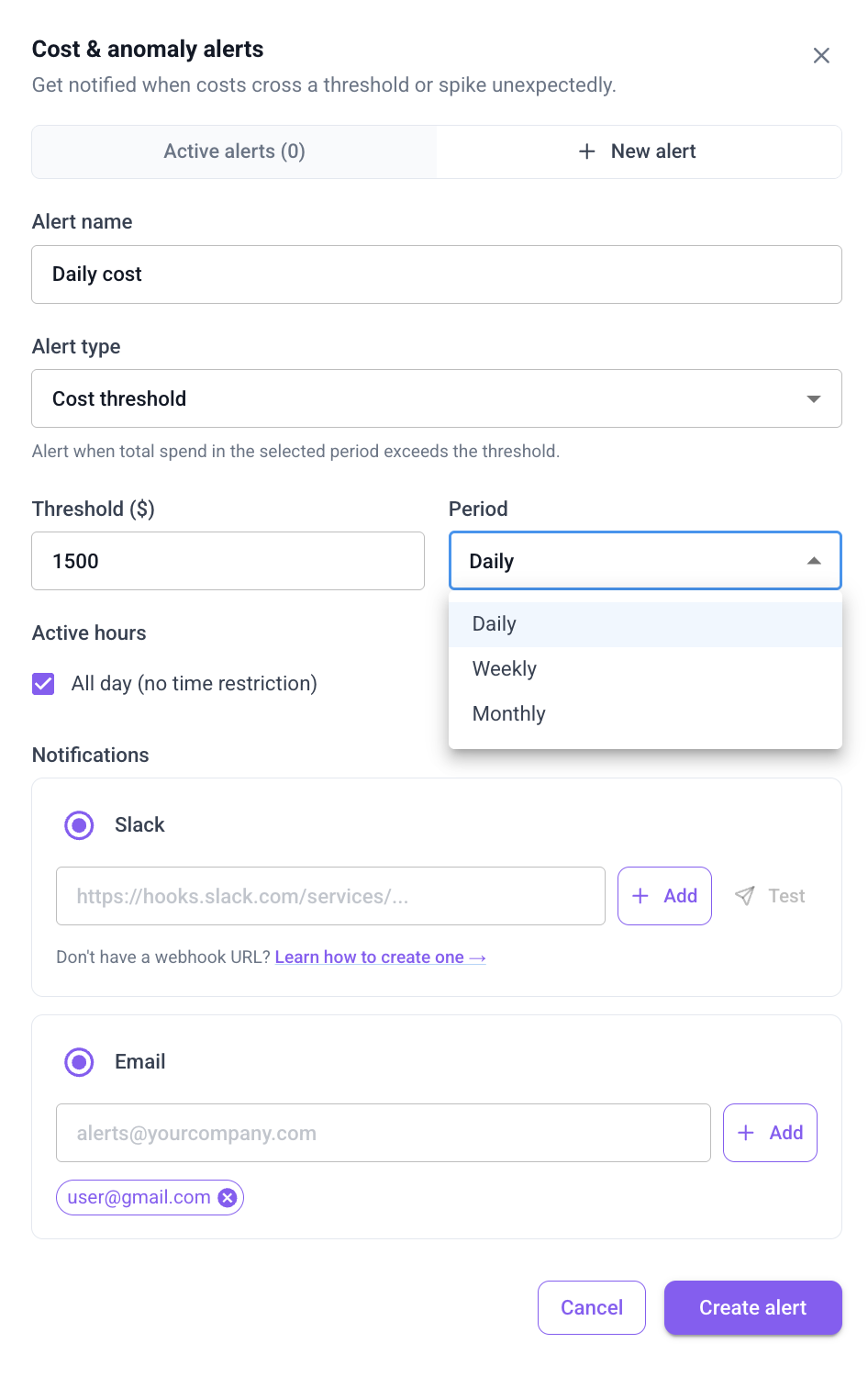
Click Manage Alerts to get notified when costs cross a threshold or spike unexpectedly.
- Click New alert and give it a name
- Choose an Alert type:
- Cost threshold - alert when total spend in the selected period exceeds a dollar amount
- Cost anomaly - alert on unexpected spend spikes
- For threshold alerts, set the Threshold ($) and the Period (Daily, Weekly, or Monthly)
- Optionally restrict alerts to specific Active hours, in your local timezone or UTC
- Choose how to be notified - Slack (via webhook URL) and/or Email - and click Create alert
How to Use This Page
- Sort by cost to identify top spenders
- Detect anomalies using the daily chart, or set up an alert to catch them automatically
- Break down by warehouse to see which warehouses drive the most spend and the most savings
Next Step
Set spending limits by domain in the Budget page.